Weekly Digest #155, 13 Dec 2025
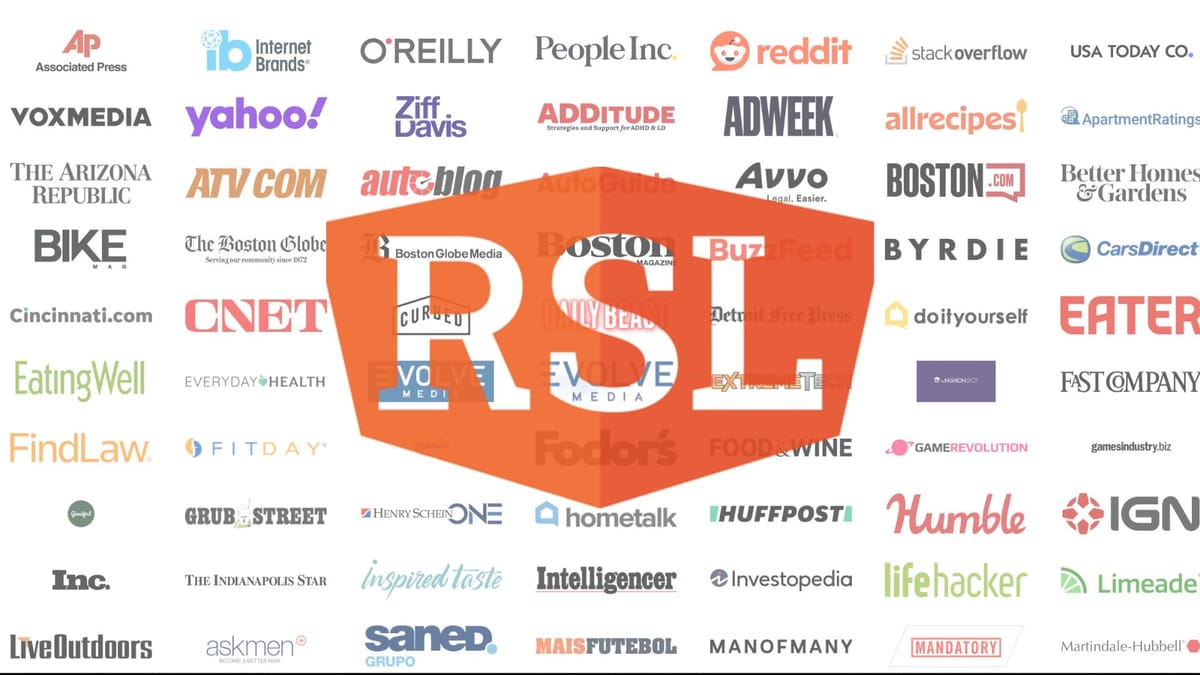
A coalition of 1,500 publishers, web infrastructure providers, and standards bodies has launched the Really Simple Licensing (RSL) 1.0 standard. It represents a massive, collaborative effort to rebalance the relationship between content creators and the automated systems that consume their work.

RSL 1.0 Is Here to End AI’s Free Lunch. It Might Actually Work.
The current AI boom is built on a foundational, and deeply unsettling, tension. The models providing incredible value are trained on the vast expanse of the public web, often consuming content from creators and publishers without permission, attribution, or compensation. This dynamic, a form of value extraction that risks depleting the very ecosystem it relies on, has been described by author Cory Doctorow as "enshittification." When commercial incentives go unchecked, the system is tuned to serve the provider's interests over those of the users and creators who generate the value in the first place.
In a collective response to this problem, a coalition of 1,500 publishers, web infrastructure providers, and standards bodies has launched the Really Simple Licensing (RSL) 1.0 standard.
The launch of RSL 1.0 represents a massive, collaborative effort to rebalance the relationship between content creators and the automated systems that consume their work. It provides the technical and economic building blocks to establish clarity, transparency, and the foundation for new economic frameworks for publishers and AI systems to contribute to a sustainable internet, one where human creativity and knowledge are properly valued in the age of AI.
RSL is more than just a technical tool; it is a fundamental attempt to build a new, more equitable business model for the AI-driven internet. This represents a fundamental shift in the power dynamics of the open web—a move from the passive, hope-based system of robots.txt to an active, market-based framework for asserting value. RSL 1.0 augments this old protocol, transforming it from a simple yes/no signal into a universal, machine-readable language for expressing detailed licensing terms. This allows publishers to move beyond a binary block and specify the exact conditions under which their content can be used. RSL 1.0 supports a variety of specific licensing models:
- Pay-per-crawl fees: Mandates compensation for each time an AI bot scrapes the site.
- Pay-per-inference fees: Enables compensation when an AI model uses the site's work to generate a response.
- Subscriptions: Supports standard subscription-based access models for crawlers.
- Free models: Allows publishers to explicitly grant free access for specific, designated uses.
Any new web standard faces a chicken-and-egg problem: its value is contingent on adoption by major players. For publishers, negotiating individually with trillion-dollar AI companies is a losing proposition. Collective action is the most viable path to create the leverage needed to bring global platforms to the table.
This is the strategic purpose of the RSL Collective, the nonprofit collective rights organisation behind RSL 1.0. The Collective's purpose is to simplify negotiations for all parties and to spread the enforcement-related legal costs among its members. As co-founder Doug Leeds explains, the goal is to get "a big group of people to say it’s in your interest, both efficiently, because you can negotiate with everybody at once, and legally, because if you don’t, you’re violating everybody at once."
RSL's success is not guaranteed, as the standard only affects AI companies that choose to comply. Bad-actor scrapers who ignore the rules can still exist, highlighting the ongoing need for robust legal and technical enforcement. Fortunately, the RSL standard includes specific, practical tools that make compliance more attractive to both publishers and responsible AI developers.