
Weekly Digest, Issue #169, 11 April 2026
Contrary to popular belief, a Mather Economics analysis suggests that while organic search is declining, this trend is part of a broader, multi-channel contraction affecting social and direct visits alike.
I have built my career at the crossroads of journalism, business, and technology, working for private news organisations and government institutions across France, Switzerland, Germany, and Spain.
Contrary to popular belief, a Mather Economics analysis suggests that while organic search is declining, this trend is part of a broader, multi-channel contraction affecting social and direct visits alike.
The transition toward an "agentic economy", one driven by autonomous AI agents, requires a fundamental shift in how technology is governed and structured.
The Future Today Strategy Group's Convergence Outlook 2026 proposes a framework of interconnected systemic change, arguing that isolated technological or social shifts no longer exist.
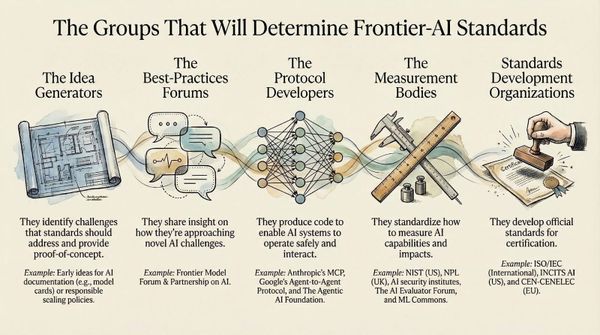
Standards are not merely bureaucratic "alphabet soup"; they are the invisible blueprints that determine whether a frontier technology serves as a foundation for growth or a trap for future failure.
Expanding the Publisher’s Customer Surface in the AI-casting Era. The shared incentives that once supported quality journalism during the era of navigational and transactional search are now being replaced by AI-native exploratory queries. This change does more than just lower website traffic; it makes the old publisher
The Nordic High-Trust Model is Defying the Digital Gravity of Big Tech. The Nordic region is widely seen as a global role model for democratic health and media freedom. While many countries face increasing polarisation and digital disruption, these five nations have maintained notable social cohesion. However, they are
The most resilient media companies in 2026 have realised they are no longer in the business of selling attention to the highest bidder. Instead, they operate as sophisticated content marketing engines for more dynamic, high-margin products.
As AI usage has increased, people's attitudes towards it have evolved; they recognise the advantages of AI-saving time, reducing administrative tasks, assisting with learning, and unlocking creativity, while also expressing ongoing concerns about AI eroding what makes us human.
This week's earnings reports from the US show that with the right focus, the Post can return to growth, and it's actually a pretty good time to be a premium news publisher.
The traditional economic bargain of the open web, where publishers provided content to search engines in exchange for traffic, is fundamentally broken. It needs a new economic model with collective licensing as a new economic layer for publishers and content creators.
As tokenization moves into a critical financial market infrastructure, it can signal a similar shift for decentralised content provenance. Platforms and publishers would move from using it as an optional add-on to making it the default plumbing they quietly rely on.
Traditional decision cycles that rely on reports, news coverage, or analyst opinions often result in a delayed response to significant change. The future sends warnings. Those who notice first get ahead.